
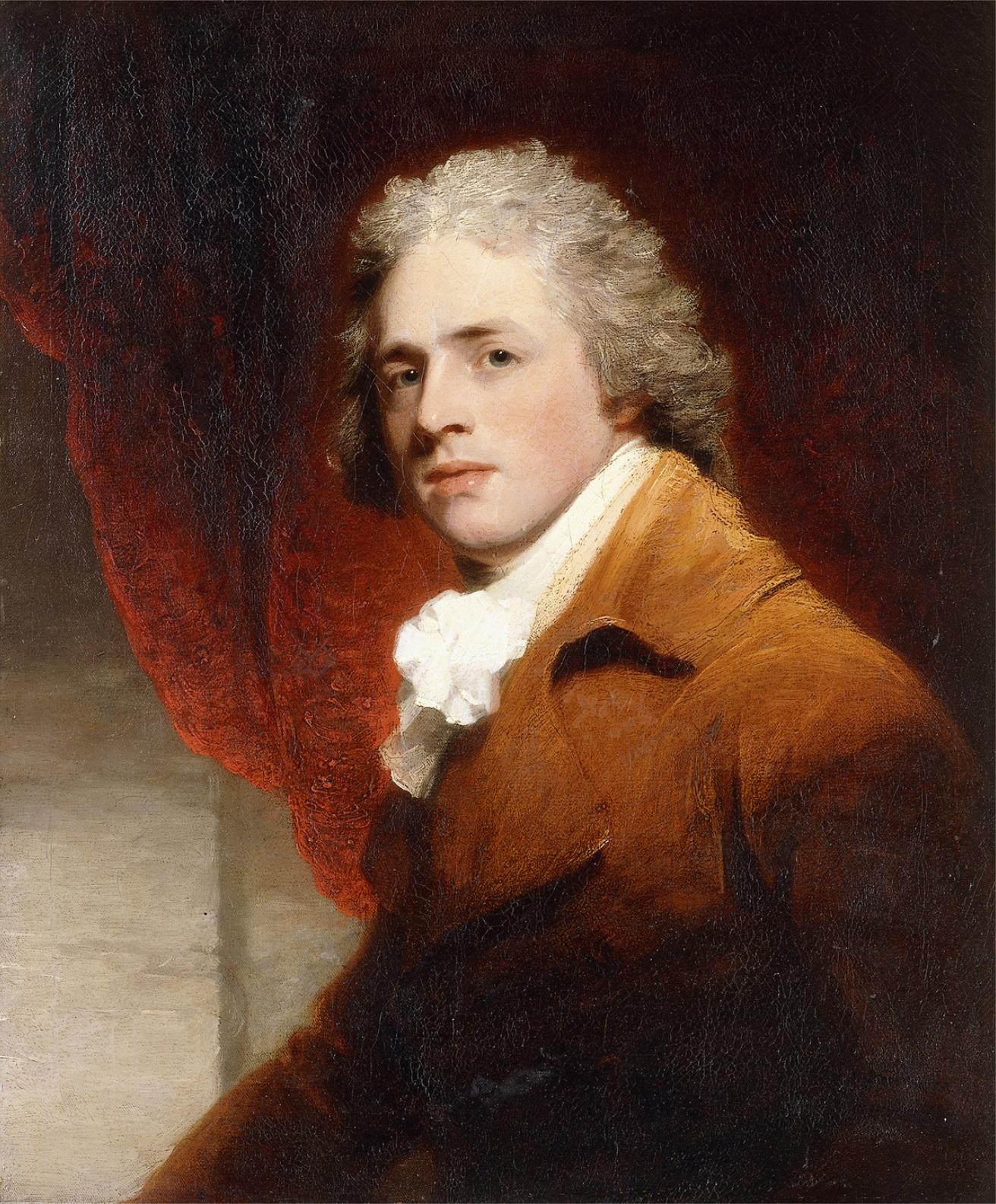
Richard Brinsley Sheridan
and The Rivals
The Playwright
Richard Brinsley Sheridan (1751–1816)
Richard Brinsley Sheridan was only 23 years old when he wrote The Rivals. By that time, he had already eloped to France, fought two duels, nearly been killed and married one of England’s most celebrated young singers. He also needed to find a way to make a living.
Born in Dublin in 1751, Sheridan came from a theatrical family. His father, Thomas, was an actor, theatre manager and teacher of elocution. His mother, Frances, was a successful novelist and playwright. The family eventually settled in Bath, England, where Sheridan became acquainted with the people and social customs that would provide much of the material for The Rivals.
Elizabeth Linley
In Bath, Sheridan fell in love with Elizabeth Linley, a remarkably talented singer who had been performing professionally since childhood. She had no shortage of admirers, among them Sheridan’s own brother.
Another admirer, a married man named Thomas Mathews, pursued Elizabeth to the point that she decided to escape to France and seek refuge in a convent. Sheridan accompanied her, and the two secretly married in 1772, although the legality of the marriage was questionable.
Upon their return to England, Sheridan fought two duels with Mathews. The first ended in Sheridan’s favor. The second left him seriously wounded.
Richard and Elizabeth were officially married on April 13, 1773, despite objections from Sheridan’s father.
Sheridan insisted that Elizabeth give up her career as a professional singer. Public performance, in his view, was not appropriate for the wife of a gentleman. Elizabeth had also grown weary of the pressures that accompanied her career.
Unfortunately, her retirement meant the loss of a considerable source of income. Sheridan had abandoned his plans to pursue a career in law and now had to find another means of supporting his household.
He decided to try his hand at writing for the theatre.
Knowing something about Sheridan’s courtship of Elizabeth makes reading The Rivals particularly interesting. The rival suitors, secret romance, disapproving parents and dueling gentlemen were all things with which he had some personal experience.
The Rivals: A Rather Unsuccessful Opening Night
When The Rivals opened at London’s Covent Garden Theatre on January 17, 1775, it was not particularly well received.
The play was too long, reportedly running close to four hours, and there were objections to some of the language. The character of Sir Lucius O’Trigger was particularly troublesome, as was John Lee’s performance in the role.
The play was withdrawn after its first performance.
Sheridan spent the following days rewriting. He reportedly cut about 45 minutes from the play, revised the character of Sir Lucius and replaced Lee with an Irish actor named Lawrence Clinch.
The revised version opened on January 28, just eleven days later, and was a success.
In the preface to the published play, Sheridan discussed the experience and offered an interesting piece of advice to fellow playwrights. He suggested that they consider their first night’s audience much as they would a candid friend attending their final rehearsal.
It is worth remembering that one of the most celebrated comedies in the English language needed considerable work after its first public performance.
Where Did Mrs. Malaprop Come From?
Sheridan may have borrowed a little from his mother when creating Mrs. Malaprop.
Frances Sheridan had written an unfinished comedy entitled A Journey to Bath, which featured a character named Mrs. Tryfort who had a similar habit of confusing words.
His father’s profession as a teacher of proper speech and pronunciation may also have contributed to the character.
The name Malaprop comes from the French expression mal à propos, meaning inappropriate or out of place. The character became so well known that her name eventually entered the English language.
A malapropism is the mistaken use of a word in place of a similar sounding one, often with amusing results.
One of Mrs. Malaprop’s better known examples from the original play is her description of someone as being “as headstrong as an allegory on the banks of Nile.”
She means alligator, of course.
A Busy Few Years
Sheridan wasted little time following the success of The Rivals. Later that same year, he wrote the comic opera The Duenna, which ran for an extraordinary 75 performances during its first season.
In 1776, Sheridan and his business partners purchased David Garrick’s interest in the Theatre Royal, Drury Lane. Within two years, they had acquired the remaining shares.
The School for Scandal premiered in 1777, followed by The Critic in 1779.
By the age of 28, Sheridan had written the three comedies for which he is best remembered today and had become an owner of one of London’s most important theatres.
A Playwright in Parliament
In 1780, Sheridan was elected to Parliament, where he would spend the next 32 years.
He was an exceptionally gifted public speaker and became particularly well known for his speeches during the impeachment proceedings against Warren Hastings, the former Governor General of Bengal.
Sheridan supported the cause of the American colonists and was an advocate for the rights of the Irish people.
His involvement in politics did not end his association with the theatre, although managing his various interests and finances proved increasingly difficult.
Elizabeth died of tuberculosis in 1792 at the age of 38. Sheridan married again in 1795, to Hester Jane Ogle.
Watching His Theatre Burn
On February 24, 1809, the Theatre Royal, Drury Lane, was destroyed by fire.
Sheridan was in the House of Commons when news of the fire arrived. The loss of the theatre was a financial disaster for him.
There is a wonderful story that Sheridan was sitting in a nearby coffeehouse drinking a glass of wine while watching the theatre burn. When someone questioned how he could sit there drinking under the circumstances, Sheridan reportedly replied:
“A man may surely be allowed to take a glass of wine by his own fireside.”
Thomas Moore, who published a biography of Sheridan in 1825, acknowledged that he could not establish whether the story was true. Whether Sheridan actually said it or not, it has been associated with him for generations.
His Final Years
Sheridan lost his seat in Parliament in 1812. His remaining years were marked by financial difficulties, mounting debts and deteriorating health.
He died on July 7, 1816, at the age of 64, and was buried in Poets’ Corner at Westminster Abbey. For all his accomplishments in theatre and politics, it is remarkable that much of Sheridan’s literary reputation rests on a handful of plays written during a relatively short period of his life.
The Rivals Today
More than 250 years after its first performance, The Rivals continues to be produced. The fashions, social customs and language of 1775 may be unfamiliar to modern audiences, but the people Sheridan wrote about are not. They are jealous, vain, romantic, foolish, stubborn and occasionally quite ridiculous. Bill Taylor’s adaptation retains the setting, characters and comic spirit of Sheridan’s original while reducing the running time to approximately 100 minutes and making the language more accessible to today’s audiences. Interestingly enough, shortening The Rivals to better serve its audience is something Sheridan himself did in 1775.